Fantastic six minute video on how much we don’t know about the universe, and why that is so damn cool. From the ever-excellent PhD Comics.
Dark Matters from PHD Comics on Vimeo.
Fantastic six minute video on how much we don’t know about the universe, and why that is so damn cool. From the ever-excellent PhD Comics.
Dark Matters from PHD Comics on Vimeo.
If I ever have to be electrocuted, this is how I’d like to go.
I forgot to mention during my last post that part of what impressed me about the script was Susan’s accuracy in predicting future events. She’s ridiculed by her class for thinking that the British monetary system was decimal; she said it hadn’t happened yet. She says there’s a fifth dimension of space; okay, so she’s a few dimensions short according to current thinking, but so far as I know, nobody in 1963 was conversant in string theory.
The opening of The Cave of Skulls is a bit disappointing in comparison (synopsis). The TARDIS arrives in the past, presumably the 100,000 BC of the title of the story arc, and we’re treated to a bunch of cavemen who look about as prehistoric as 1960s Klingons look alien. A caveman named Za is trying to recreate fire by rolling a bone in his hands; apparently his father discovered fire but didn’t bother to share the recipe. I’m thinking more that fire was discovered by taking it from a lightning strike, and that once people came up with the Tom Hanks methods of baking coconuts, this became part of the cultural heritage fairly damn quickly. But Tom shouldn’t feel bad, as the Doctor has also forgotten that fire can be made without matches.
We’re introduced to the friendly old trope of the TARDIS not quite working properly; according to the characters, this is the first time that it gets stuck looking like a police box, and I wonder how much of the audience looked forward to the story line where it gets fixed. They’d have a long wait.
Unfortunately, Susan sort of loses it when the Doctor gets surprised by a caveman with an axe, which is fairly un-Doctorlike for that matter. This is the first time that the Doctor’s been in any trouble? You’d think Susan would be used to this by now, and she’d trust the Doctor to take care of himself. I don’t know how far along the Doctor is supposed to be in his first incarnation by the time the story begins, but unless he’s very fresh from his zeroth incarnation (or whatever the hell Time Lords are doing when they’re growing up), this seems like a rather silly way to be put in danger.
We then go back into caveman society for a tiresome expository scene, and a plot point that should give Mark Twain a screenwriter credit. It is perhaps notable that both sides of the Cro-Magnon political struggle sound awfully similar to Republican talking points; just insert “tiger” for “al-Qaeda,” and “fire” for “millimeter backscatter X-rays at every airport.”
 |
Rating system: |
Moral of the story: a guy will put up with a lot if his wife wears a gold bikini.
Season 6 of Doctor Who is the first season I’ll be keeping up with as it airs, and I’m fully expecting to hate the BBC in between shows for making me wait a week for the next one. So I’m embarking on a longtime plan to watch the original series, which I’m expecting will take me roughly as long to watch as it took the BBC to make.
Tonight’s episode: Season 1, Episode 1, Doctor 1: “An Unearthly Child.” Original airdate: 11/23/1963, which makes this only one day younger than the Kennedy assassination. I approached this episode—and really all of the first few seasons—with a great deal of trepidation, as I’m not particularly fond of out-of-date science fiction. I can get through the Star Trek original series thanks to a fond nostalgia, but not much else.
Surprise! This episode is actually still pretty damned good. Turns out that I can’t write a synopsis to save my life, so feel free to check out the one here.
Opening credits remind me of the worse effects of The Outer Limits, but the Who theme more than makes up for it; I wasn’t aware how much of what I love about the current theme was actually nearly fifty years old.
We’re introduced to the first two grownup companions, schoolteachers of the Doctor’s granddaughter, whose names escape me at the moment but will probably become ingrained shortly. Their repartee could have been a dated, muddled mess; instead, these are two smart people who treat each other as peers and generally comport themselves well onscreen. They appear to be more than a little dense when they first walk into the TARDIS—personally, if I walked into a room larger than its outside, I’d be less sure of myself—but they haven’t had the benefit of watching the last few decades of science fiction.
Likewise for the Doctor’s granddaughter; I’m always afraid of the teen interest element, but Susan isn’t 10% as annoying as I feared she might be. There’s a bit more shrill and foolishly headstrong than seems likely in her character, but again, that might just be the culture gap.
Which brings me to William Hartnell’s Doctor. This makes the episode. I don’t know how this played in 1963, but in 2011 he enters on screen like the classic creepy villain; you half-expect Susan to be chained up as his sex slave in the back of the phone booth. He’s a complete dick to both of her teachers and not much better to Susan herself; the bastard nature of recent Doctors is on full display here from the get-go.
Other points of note: the TARDIS sound is just as old as the theme; Hartnell’s teeth prove that those old jokes about British dentistry aren’t entirely untrue; I’m not sure what knocked out the passengers when they travelled through time, but that wide-eyed look on the Doctor’s face when they got there was a great touch—he’s so certain of himself until then, but that one moment shows the character isn’t omniscient.
I’m looking forward to what’s coming next.
 |
Rating system: |
Did you know Pla-Doh conducts electricity? I didn’t.
[I got a little silly this afternoon. Preserving it here for posterity.]
7:05 PM: #RapturePR Yes, of course it’s today. Except in Australia, Asia, and parts of Eastern Europe.
7:12 PM: #RapturePR Don’t bother looking for those Disney executives. We needed their help dealing with the long lines.
7:20 PM: #RapturePR Attn idiots murdering children: please reread the fine print on your ticket. Really. We mean it.
7:25 PM: #RapturePR We’re getting word that today’s volcano and earthquakes were not quite earth-shattering. The people responsible have been sacked.
7:28 PM: #RapturePR Attention Copts: we cannot be responsible for your safety if you invade Libyan airspace on your way up.
7:32 PM: #RapturePR Yes, the flying nuns *did* get a head start over the rest of you. Stop grumbling. They’re *nuns*.
7:34 PM: #RapturePR Oh, by the way… Mayans? Suck it.
7:36 PM: #RapturePR We’ll be processing you in alphabetical order, no complaints please. Abdul abn Aaziz! Step on down. You’re our first contestant.
7:38 PM: #RapturePR Those of you with a long wait ahead of you, please visit our gift shop/snack bar. We borrowed that idea from our Jewish friends.
7:40 PM: #RapturePR If it is 5/22 where you are, don’t panic. We stopped being literal about the word “day” a week before Genesis.
7:44 PM: #RapturePR Rapturees from Washington DC, please be patient. Our air traffic controller fell asleep.
7:48 PM: #RapturePR Please refrain from taunting Jews on your way up. We don’t want you to piss off our accountants. Atheists are fair game.
7:54 PM: #RapturePR Liberty University fraternity brothers: please stop whizzing on Virginia. It’s unseemly.
8:00 PM: #RapturePR FAQ: no, we do not have AT&T 3G coverage. Wow, and we thought *we* were optimists.
8:00 PM: #RapturePR FAQ: just leave the iPad at home. Your solar charger will not work off of Holy Radiance.
8:03 PM: #RapturePR FAQ: yes, you can drink here. Immortal, remember? The open bar is just past the Crystal Meth Pavilion.
8:06 PM: #RapturePR FAQ: No, you will not receive 72 virgins upon arrival. How did you get this number?
8:06 PM: #RapturePR We have no disease or pregnancy. Most virgins will give it up before they clear the stratocumulus layer.
8:13 PM: #RapturePR FAQ: Mac/PC idiots: neither. We’ve been Open Source since 33 AD. Can’t help it that y’all forked the codebase so often since.
8:15 PM: #RapturePR No, Tim LaHaye is NOT invited. When we told you about camels and eyes of needles, did you think we were bullshitting?
8:15 PM: #RapturePR Kirk Cameron? Please. You can keep that putz.
8:19 PM: #RapturePR Our 5,000,000th customer just went sub-orbital! Suck it, Branson.
8:29 PM: #RapturePR @ACLU Sure, feel free to revoke our tax-exempt status. We can turn water into wine, it’s not like we need more money.
8:31 PM: #RapturePR Attention rapturees: suborbital windsurfing off of the International Space Station begins in 15 minutes. Wear sunscreen.
8:33 PM: #RapturePR We hear that Californians are assembling in open fields so they don’t hit their heads at 6 PM PST. That’s so adorable.
8:34 PM: #RapturePR Sorry, big guy. We’ve got the Hallelujah chorus. @DepressedDarth: Jesus should walk down from clouds to the Imperial Death March.
8:35 PM: #RapturePR Iceland? ICELAND? Fuck. “@slashdot: Volcano Erupts In Iceland bit.ly/m1f61k”
8:37 PM: #RapturePR Damn, we appear to have taken DSK by mistake. Sorry about that whole “home confinement” thing. Working on it.
8:40 PM: #RapturePR Yes, we invited the 25,000 Big Mac guy. He said he’d prefer to go for 30.
8:43 PM: #RapturePR Attention shoppers: doors closing on West Coast in 18 minutes. Please bring your last minute repentance to the counter.
8:45 PM: #RapturePR For Our sake, Camping. STOP CALLING. We didn’t pick up the damn phone earlier and we’re not going to now. Enjoy the gravity.
8:50 PM: #RapturePR You guys with the helium-filled blow-up dolls? I haven’t seen Jesus laugh like that since Magdalene brought cake to the Seder.
8:53 PM: #RapturePR Hey, Facebook. Foursquare is eating your lunch with their Heaven-enabled checkins. Get on it, will you?
8:54 PM: #RapturePR We’re the top story on Google News! On behalf of PR Staff, we’re taking vacation in Valhalla as soon as we can get out of here.
8:56 PM: #RapturePR Please note: entire Republican 2012 field can expect to be there Monday. Not that we’re judging, or anything.
8:58 PM: #RapturePR If you intended to see On Stranger Tides before coming, We recommend a drive-thru. It’s not like we have it here.
8:59 PM: #RapturePR Camping, the Big Guy just went to get the thunderbolts. You *really* want to put down that fucking phone.
IMF chief tried to fuck maid after mistaking her for a small financially crippled country
IMF chief Dominique Strauss-Kahn has claimed he only tried to fuck a New York maid because he thought she was a small Caribbean island in financial difficulty.
Hat tip: Carl Nyberg.
It’s become a common refrain in my ongoing debates with Brian Greenberg: he says something completely cockamamie (IMHO) about George Bush or the financial industry, and I reply, “you and I live on different planets.” It’s been my theory for a while that despite our both being raised as Northeastern middle-class Jews, he and I just have completely different frameworks for looking at the world, and how we filter information about it.
Then, twice today, Eli Pariser jumped in with some reasons why this might be true, first from the following TED video, then in an hour-long interview on the Diane Rehm show.
Shorter version of Pariser: Google, Facebook, Amazon, Netflix, and most other gatekeepers on the web are personalizing the results they give you for your searches. As a result, you don’t know what’s being excluded from these results, so you increasingly live in a filtered bubble of information that’s been selected for you, based on not only your login cookies, but other data such as what wifi hotspots you’re nearby, and what computer you’re using. As a result, when Brian looks up information about Goldman Sachs, he’s going to get results from the Wall Street Journal and Bloomberg; I’m more likely to see Matt Taibbi and Mother Jones.
I’m still chewing over this idea, but my initial impression is to reject it. The people who are most going to be affected by this kind of personalization are also the people who are unlikely to go seeking alternate news sources in the first place. If I want to read a WSJ article, I’m not going to be dissuaded by not seeing it in the first four links on Google. But that presupposes that I know about the Journal, and I know when I want to look for their information (and when I want to avoid it as a self-contained and self-satisfied echo chamber).
The idea that we all benefit from having a randomized percentage of our news feed is also nothing new: David Brin suggested it in 1990’s Earth, which talked about a personalized news filter that we still don’t have 20 years later. The difference between Brin’s solution (which predated the common use of the Internet), and what Google is doing, is precisely what Pariser is calling for: transparency in what’s being filtered out. There’s no way to tell Google, “I place a high value on seeing topics that are outside some of my boundaries—but really, I don’t ever need to know about sports. Oh, and please show me a cogent Republican argument if they ever happen to come up with one.”
But this brings me back to something I wrote about years ago, and which surprisingly (and amusingly) I can’t find in Google. Head over to Google News, and what do you see? My page, considering only the headlines, is currently being built from the following sources: ABC, ABC (Australia), ArsTechnica, the BBC, Bloomberg, the Boston Herald, the Chicago Tribune, the Christian Science Monitor, CNN International, Computerworld, the CBC (Canada), CTV (Canada), the Daily Mail (UK), Fox News, the Guardian (UK), the Hindu (India), Hollywood.com, InformationWeek, iVillage, the Kansas City Star, the Los Angeles Times, MediaPost, the Nation (Pakistan), the New York Times, NPR, PCWorld, the Register (UK), Reuters, Reuters Africa, the Seattle Post Intelligencer, the Sydney Morning Herald, the Telegraph (UK), TMZ, USA Today, WHDH (NBC Boston), and ZDNet UK.
That list would be twice as long if I checked the sidebars, or if I did my usual thing and opened Google News in tabs. Compare that list to the access to media I had twenty years ago: the Philadelphia Inquirer, NPR, CNN, and perhaps an early version of ClariNet. (Granted, 20 years ago September I started grad school at the Annenberg School for Communication, so at that point my media buffet broadened quite a bit more.)
It’s my theory that even with constricted filter bubbles, the greater constriction is imposed by most people’s apathy, the same dynamic that leads to more interest in Donald Trump than a discussion of actual spending policy. Regardless of what might be filtered out of the Internet tidal wave of information, there’s still a much better chance of accidentally lodging an interesting headline in the brain of someone who doesn’t give a damn, which might just lead to a painless and cost-free click to find out more.
What Pariser is concerned about, in my opinion, is that the Internet has near-infinite potential to make all of us much more informed of the world around us, and that content filtering might reduce from this theoretical maximum. I agree with him, and stand behind the idea of making these filters more transparent. But what’s keeping us from realizing this potential is simple human nature, which isn’t going to be fixed by any algorithm.
Don’t know if this is real. Don’t much care, either.
Actually, this explains a lot.
Fascinating overview of some of the Frankensteinian ways science is progressing:
I disagree with the basic premise, though, that we need to “question” the directions this is going. Throw this to the political process, and it’ll be decided by the ignorant, the fearful, and the Bible bangers. Some of this stuff gave me pause—although I’m much more troubled by robotic cockroaches than mice with ears growing out of their backs—but this is science that will likely not get a fair hearing in the general public. I don’t think we’re mature enough to handle the questions that Wolpe wants to raise… which means that nations with more intelligent and educated political systems, or dictatorial ones, will eat our lunch in biotech if we let this become a political football.
This power failure resulted in one of the most serious conditions that can affect a nuclear plant—a “station blackout”—during which off-site power and on-site emergency alternating current (AC) power is lost. Nuclear plants generally need AC power to operate the motors, valves and instruments that control the systems that provide cooling water to the radioactive core. If all AC power is lost, the options to cool the core are limited….
The containment building’s purpose is to keep radioactivity from being released into the environment. A meltdown would build up pressure in the containment building. At this point we do not know if the earthquake damaged the containment building enough to undermine its ability to contain the pressure and allow radioactivity to leak out.
Via Glenn Greenwald. US waterboarding: not torture. Nazi waterboarding: torture. So sayeth the New York Times.
This president and this attorney general say waterboarding is torture, but the previous president and attorney general said it is not. On what basis should a newspaper render its own verdict, short of charges being filed or a legal judgment rendered? …
Stéphane Hessel was in exile with Charles de Gaulle in London, imprisoned in concentration camps, waterboarded in Nazi torture sessions and saved from hanging by swapping identities with an inmate who had died of typhus.
Bay City Luv (no, really), live in concert, Geary & Mason.
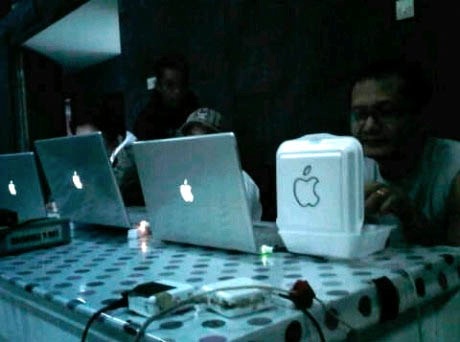
Sure, the green design groups will hate it, but it’s the first MacBook to break the $9.99 price point. (via Laughing Squid)
|
If you needed further proof that Japan is very very weird. Also, relaxed laws concerning restaurant hygiene and animal cruelty.
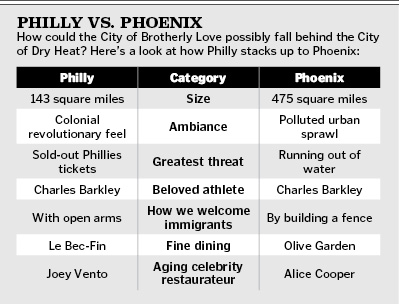
I’ve had a running joke for over 20 years that when I travel internationally, I have to bring along a Canadian to translate what I’m saying into English. Turns out, it’s not my fault. It’s my parents’ fault for not getting the hell out of Philadelphia.
Hard to do this with a USB thumb drive. Hat tip: Mike Worth.