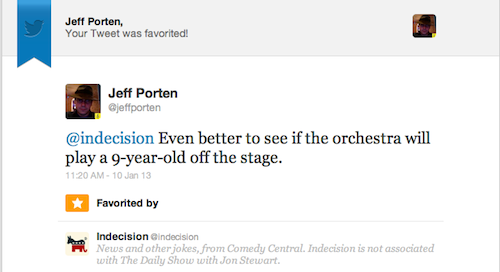
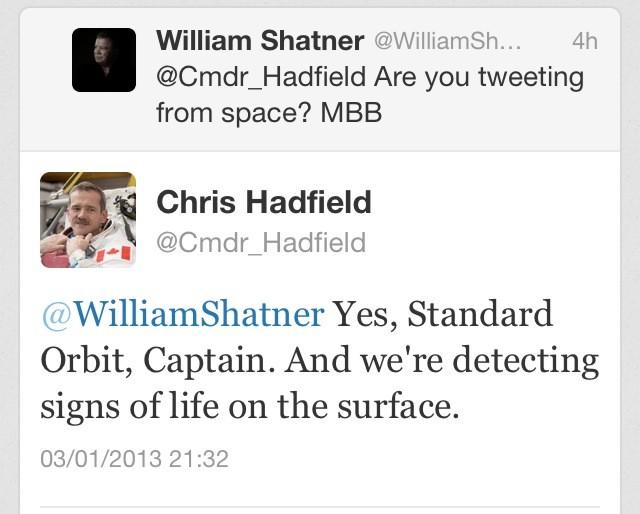
This article includes, IMO, the best one-liner I’ve written in… well, maybe ever. Let’s see if anyone agrees with me on which one it is.
http://tidbits.com/article/13492 TidBITS CES 2013: Showstoppers from Useful to Insane
This article includes, IMO, the best one-liner I’ve written in… well, maybe ever. Let’s see if anyone agrees with me on which one it is.
http://tidbits.com/article/13492 TidBITS CES 2013: Showstoppers from Useful to Insane

Years ago, I read about an overnight bag that Casanova packed, which he claimed had the bare essentials for every gentleman upon waking up. This included a few rolls for breakfast, silver for spreading marmalade on the rolls, and various other accoutrements of 18th-century living that seem ridiculous now. Unfortunately, my Google-fu is unable to bring up the quote.
Was just reminded of this by Mat Honan’s coffee setup. Scroll down to “CES Hacks”.
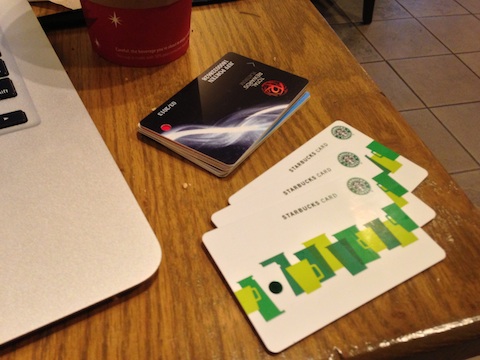
Me, I’ll settle for the 24-hour Starbucks.
Update: Michael Weinmayr informs me that this is from a footnote in Good Omens, which is probably a far more reliable reference than most things I’ve read that I half-remember.
I am belatedly realizing that the bastards at the Max Borges Agency have cleverly concealed press releases for products not at CES in my inbox, with press releases that certainly make it appear that they should be on my CES agenda.
This means that the unholy bastards at the Max Borges Agency have managed to waste my time both during my initial scan of their incoming emails, and again now when I’m at CES working out my agenda, and my time is at a premium.
Therefore, it is highly likely that I will generally think poorly of tech companies who hire the scumsucking PR flacks at the Max Borges Agency in the future. Or at least, those particular scumsucking PR flacks at the Max Borges Agency who use this underhanded tactic. I mention this just in case anyone in the future happens to come across this post while deciding whether to hire the Max Borges Agency.
Fortified with six-mile walks and sheer chaos.

Two weeks with an AT&T iPhone, following 10 days with a Verizon iPhone, and various observations:
1. I was more impressed with Verizon’s coverage than I am with AT&T’s. I dropped my Virgin 4G because their coverage—the same as Sprint’s—was only 4G in the places where I’m reasonably assured of having good wifi. Atlantic City is the key place I’ve needed fast Internet service, and both Verizon and AT&T step up to the plate. But AT&T data has dropped repeatedly in places where Verizon was fine.
2. That said, I prefer having data during a phone call, and that means AT&T is the clear winner here, as Verizon still cuts off data whenever the phone rings. That’s a flaw in the iPhone, which doesn’t yet have the circuitry to support Verizon data and calls simultaneously.
3. For CES, I’m traveling with both an AT&T iPhone and a Verizon Mifi, and I’m already glad to have both. AT&T drops in both the restaurant here and my hotel room at the Quad, Verizon is nicely supporting me.
4. I’m convinced that AT&T icons on the iPhone screen are designed to be confusing. I was initially disappointed that AT&T LTE didn’t come up while I was in Atlantic City, but their 4G service—which I assume is HSPA+ when it’s not LTE—is speedy as hell, although with lower maxima. (Given the monthly data caps, this might be a good thing.)
But what’s really confusing me about AT&T is that the number of bars and the presence of the LTE signal doesn’t seem to mean diddly. I can have moderate signal and LTE, and still twiddle my thumbs waiting for a page to load on the iPhone. Meanwhile, a single bar + LTE can still give me instant gratification. Not sure if the bar meter is displaying a direct dB signal measurement or whatnot, but I don’t care about that—I want a visual indicator of how well my phone is working, and to hell with the tech details. The AT&T displays seem to be skewed instead towards “make the user happy with the nifty icons, regardless of how his performance will be.”
Apparently, I was pretty damn busy in transit over the last 24 hours. The scary thing: my CES schedule looks ridiculously overbooked in my calendar even at itty-bitty thumbnail size.

When I started coming to Vegas in the late-80s, the Imperial Palace was “that place owned by the Nazi sympathizer.” After it was bought out by Harrah’s, it became “the cheap hole where you can stay on the Strip.” Now it’s been renamed The Quad and is undergoing a major renovation. I’ve just arrived for a long stay over the International CES, so I’ll be updating this review as I come up with new things worth noting.
Aside: as a Penn grad, I love that when you type “the quad” into Google, the first two hits are “The Quad Las Vegas” and “The Quad UPenn”, after the dormitory on campus that’s been there since the undergrads could almost remember the real Ben Franklin wandering on campus. (Not really.)
If you remember the IP, The Quad makes its biggest impression when you arrive in the porte cochère or walking in off the Strip—both locations announce a very nice modernist decor, similar to the much more expensive Aria down the Strip. That impression goes away quickly; coming in from the airport shuttle dropoff, you pass by the same stores that are more Ocean City in the off-season than upscale mall, and by the time you get to the casino, it’s the same cramped and confusing layout as it used to be, but with far fewer tacky “Oriental” knick-knacks stolen from racist Sean Connery Bond films.
As before, the only real reason to stay here is Strip access for cheap. I’m in the lowest tier of Caesars premium player status, and my stay for 10 days is under $400; aside from the CES days, I’m getting a full comp. That same rated player status got me a quote of $200-300 a night at other Caesars properties on the Strip, and far higher across the street at Caesars Palace, where bog-standard CES rooms can cost $1,000 a night.
That’s exceedingly strange, because Vegas geography makes proximity look far closer than it actually is. The Quad is, in theory, “right on” the monorail system, and I’m one stop away from the convention center. In practice, I know from experience to budget a 30-minute walk to get to the monorail. Caesars Palace is “just across the street”, but that complex is so sprawling, and crossing the Strip during daytime so difficult, that it can easily be a 60-to-90 minute walk to the monorail from any casino on the other side of the Strip.
However, being on the monorail for CES is crucial. Despite a very frequent bus shuttle system, the traffic here is insane during CES, and the lines to board a shuttle at the end of a day can be a 30-45 minute wait even when the buses are arriving continually. Taking a shuttle to and from the convention center can take 90 minutes and up; the main reason I’m staying here is that I’m hoping (first time doing this, so we’ll see if I’m right) that the monorail will be traffic-immune, so commuting to and from the convention floor will minimize but not eliminate travel horror stories.
The hotel room is easily characterized as “Vegas motel”, which is not damning with faint praise because motels here, excluding the Downtown area, are surprisingly decent. Unlike a motel, the king bed has a good mattress, but otherwise the room is spartan; the only amenity I care about is a comfy chair from which to do my writing, and I don’t have one.
Surprising touches: an itty-bitty accessible balcony overlooking the pool. OTOH, AT&T reception here is touch-and-go, but I’ve got great Verizon Mifi signal. And the room has real mugs and glasses, while even the fancy rooms in Atlantic City get styrofoam.
Unpleasant surprises: I’m on the 6th floor, but even so the water pressure is mediocre, and I was ankle-deep in water after a shower. The room would be spacious, but it’s so underfurnished that the arrangement is deliberately inefficient. You could easily put a sitting area in here next to the dining table if you moved the bed.
From what I’m overhearing from the hotel staff, the rates here are still dirt cheap because it’s undergoing renovation through 2014. I assume that afterwards, this is going to be a standard Caesars Strip property with rates to match. That’s rather a shame, as the best thing about Imperial Palace was its availability for budget travel when everything else here was booked. I’d rather not see this place become just another interchangeable property in the mile-long Caesars block of the Strip.
Had a late dinner last night at Hash House a Go Go. The menu advertises the “Sage Fried Chicken Benedict” as featured on Man vs. Food, and I can believe it. Recommended for people who like their dinners served with a shovel; after a very stressful day of missed bus connections, flying, and nibbling on pretzels in lieu of actual meals, it was damned near perfect.
Two very interesting reads on the Atlantic about online dating sites and their putative effects on relationships. This is from the reply article:
Narratively, the story focuses on Jacob, an overgrown manchild jackass who can’t figure out what it takes to have a real relationship. The problem, however, is not him, and his desire for a “low-maintenance” woman who is hot, young, interested in him, and doesn’t mind that he is callow and doesn’t care very much about her. No, the problem is online dating, which has shown Jacob that he can have a steady stream of mediocre dates, some of whom will have sex with him.
Courtesy of Michael Weinmayr, as if that really needed to be said.
Okay, so points for targeted marketing, but… why exactly would someone want these?

Historically, American third parties tend to be flashes in the pan. There is an initial surge of voter interest and political upset as they assert dominance in either a region or key voting block, but they fade away within a few election cycles. The only time a third party becomes lasting is when a declining second party falls to shreds, as when the Republicans took their spot from the Whigs.
I've assumed for a long while that this was the best lens to view the Tea Party. They're unlike a third party in that they're entirely beholden to Republicans (and GOP PAC money), but like a third party, their insurrection within the Republican Party cannot be controlled by party leaders.
So I take today's NYT article with several grains of salt. It means nothing that the Tea Party is adopting fringe issues when so much of the right-wing agenda is already fringe. What matters is that the Tea Party has the power to primary incumbents out of existence, and left-leaning PACs such as American Bridge will help them do that in order to make it a Democratic seat in the general. Third party or not, the Tea Party can prevent the Republican Party from moving out of its entrenched, and possibly unelectable, position.
To my way of thinking, the big question of the next 10 years is “who replaces the Republicans?” Most likely it will be another Republican Party, less dominated by its lunatic fringe. But if the GOP founders on the rocks (leaving behind a far-right remnant, powerful regionally in Red states), there's an opportunity for a titanic shift in American politics. Because the replacement party, like during the Civil War, need not be from the same place on the political spectrum.
The Democratic Party is in no way a “liberal” party; most of its platform and all of its presidencies since the 1980s would have been comfortable Republican positions earlier. In Europe, leftist parties spring up when the former left party shifts to the center or center-right. That's been happening here since 1992, but the Democrats continue to suck up all of the oxygen in the room. That might not be the case by 2020.
Which is why I point to the Occupy movements as a qualified success, despite the mainstream tendency to laugh at their aimlessness. They answer questions that for the time being are rhetorical. Who will support a new party? Who will contribute time and money? Who will vote against Democrats for a traditional liberal agenda?
And most importantly, who will provide the visible critical mass such that a third-party vote is not obviously throwing it away on an unelectable candidate?
I'd still put the odds of this as being rather low, maybe one in four. But the re-election of Obama provided fuel for this fire—a popular but not populist centrist who refuses to entertain the traditional left. As does a highly visible lunatic right with power far beyond their electoral share. Really, the only question is if the vacuum will open, and if the left nonprofit and political coalitions will be organized enough to take advantage of it.
Why Do Paper Cuts Hurt So Much?
Short answer: fingers have lots of nerves and you use them a lot. The fingers, that is.
Gift from a very thoughtful client, but I think my wallet could probably stop a rifle round.
Mike Elgan over at Cult of Mac suggests that Apple should build a satellite iPhone.
Just to give you a sense of scale and proportion, Apple could probably buy any one of the existing satellite phone providers for less than $3 billion. (Apple has more than $125 billion in cash.) Better yet, Apple should develop it’s own high-speed, high-capacity global satellite network, which it could do for less than $5 billion, I would imagine. Note that running its own satellite system would be expensive. But it would make Apple a wireless carrier, and a global one — for decades.
Personally, I think it’s a nifty idea for Apple to get into the carrier business, especially as a market-disrupting force that covers international boundaries. But satellite is an insane way to go about it.
First and foremost, the speed of light isn’t fast enough. Getting data to and from low-earth orbit adds latency to all data requests and incoming replies. It gives an overall impression of slow connections, even if the actual transmission is speedy. And forget about gaming.
Second, a $3 billion investment in satellites is something you generally have to repeat every few years when you upgrade the damn things.
Third: think you have trouble getting signal indoors now?
That said, fantastic idea if Apple decides to go with a new technology to do it. I’ve been enamored of mesh networks for a long while, where every device is a router for every signal. Stick a couple fat pipes into a city, put a mesh router on every iPad and iPhone (hell, every MacBook too), and boom, you’ll have the best coverage you’ve ever seen on any network, with minimal installation costs. Contract out a failover to an MVNO, and you’re done.
There has been a lot of discussion going around in liberal circles ever since John Kerry’s name was first floated for Secretary of State. I’ve been surprised by the amount of vitriol, but as best as I can tell, none of the objections were about his qualifications for office—which to my way of thinking are the biggest deal.
A guy who’s a little stiff and gives long, sonorous speeches? Perfect diplomat. I prefer an old idea I heard a few years back, wherein Biden and Clinton would swap jobs for term 2, but I’m fairly sure there are Constitutional reasons why that would have to be announced before November. And if it’s true that both are lining up for 2016, well, I can see why Joe would have issues with the idea. But one thing I really like about Biden, despite his reputation for speaking off the cuff: he gets shit done, and he knows how to work a negotiation.
Most of my peers’ objections to Kerry have gone like this: we just picked up a win in Massachusetts, and Scott Brown isn’t likely to be able to regroup before the next Massachusetts Senate race; opening up a seat hands an opportunity to the GOP for a pickup that isn’t necessary. I don’t know if I buy this line of reasoning.
But what does bug me: I’ve never quite understood why the GOP went apeshit over Susan Rice. At the time, I would have told you that going apeshit is just the reflexive stance of the Republican party, and they like to have an apeshit position at any given time to keep their constituents sufficiently angry and frightened. If it weren’t Benghazi, it would be something else, and it damn well will be something else as soon as possible. Like arming teachers.
On the other hand, let’s say that the GOP bean counters saw in advance that Kerry would be Obama’s second pick, and predicted that the appropriate amount of apeshit would give them a shot at a Senate pickup. If that was their plan, then the result is that the GOP threw yet another shitfit that was entirely divorced from reality, and once again, the Democrats reflexively rewarded them for their efforts.
That’s the bigger thing that has to change. That’s what I was hoping to see die in Obama’s second term. And if it’s continuing this early, well, it sucks to be disappointed before the man is even sworn in again.
Excellent hour of interviews on spotting and treating mental illness, highlighting the truly awful state our treatment system is in. Paraphrasing: “Thirty years ago I could say some states had excellent systems in place. Today, you have to go to Northern Europe to find a good one.”
Identifying And Treating Severe Mental Illness (web page link for streaming audio and transcript)
This Facebook ad does little to increase my confidence in the TSA.

“Lose 21 pounds a day with the Dr. Oz diet! Or join the TSA!”